Monday, August 27, 2007

Objective Individual Combat Weapon (OICW) is a light weight weapon capable of firing kinetic energy projectiles and an air-bursting fragmentation munition. It allows soldiers to effectively attack targets at greater ranges. OICW provides enhanced capability for the 21st century infantry soldier which offers higher percentage of lethality and soldier's survivability. Objective Individual Combat Weapon (OICW), otherwise known as the Selectable Assault Battle Rifle (SABR), is a modular weapon system, consisting of the Fire Control System (FCS); a "kinetic energy" component comprised of a short 5.56mm rifle barrel and trigger group from the Heckler & Koch 036 assault rifle; and the grenade launcher consisting of a magazine-fed, semiautomatic 2Omm grenade launcher barrel and an action and recoil absorption mechanism. This incredible weapon has a great potential to replace the older kinds of assault rifles such as M16, M203 Grenade Launcher, and M14 that are currently used by the US Military.

Key Program Capabilities

  • 500 percent increase in probability of incapacitation
  • New soldier capability to defeat targets in defilade
  • Effective range to 1,000 meters
  • Day/night fire control; wireless weapon interface
  • Substantial weight reduction
  • Ergonomic design

System Features

  • Lethality Capability: 20MM High Explosive (Air Bursting) projectiles and 5.56MM Kinetic Energy projectiles
  • Weapon Length: <>
  • Weapon Weight: <>
  • Rates of Fire: 20MM - 10 RPM, 5.56MM - equal to M16A2
  • Range: 20MM - 1,000 meters, 5.56MM equal to or better than M16A2.
  • Combination 5.56mm and 20mm HE
  • Single trigger control for both barrels
  • Ambidextrous weapon and switches
  • Simple red dot day/night sighting system
  • Laser adjustment for targets in buildings and in defilade
  • Unique recoil mitigation and tactical operational awareness

Sunday, August 26, 2007

McDonnell Douglas / Boeing F-15 Strike Eagle Air-to-ground Attack Aircraft


The F-15E "Strike Eagle" expands the role of one of the Cold War's most potent aircraft designs - the F-15 Eagle. Strike Eagle capabilities were introduced in the latter 1980's to provide the F-15 Eagle base aircraft the ability to dedicate services in the air-to-ground strike aircraft role. Since then, the F-15E Strike Eagle has been fielded in a variety of major conflicts, continuing the high sortie success rate found in the original series.

The F-15E Strike Eagle incorporated the latest in air-to-ground capabilities while still retaining the dogfighting prowess of its base predecessor. The addition of a second crew member allows the pilot to concentrate more on the action at hand and makes the F-15E that much easier to operate. Increased payloads and combat radius have all played a role in the development making the "E" model one of the greatest additions to the USAF inventory. Powerful Pratt & Whitney turbofan engines can catapult the F-15 into the Mach 2+ range and in-flight refueling can increase her potentiality even further.

With the arrival of a dual role F-22 Raptor, the F-15 Eagle might be seeing her last decade in service to the USAF, but until then, the system will continue to be used in opening salvos when called upon.

Lockheed F-35 Lightning II / F-35 JSF (Joint Strike Fighter) Advanced Multi-Role Fighter / Technology Demonstrator


The F-35 Lightning II is being developed as a replacement for a number of aging aircraft including the A-10 Thunderbolt, F-111 Aardvark, F-16 Fighting Falcon, and
the Harrier. It will see action with planes like the F/A-18 Super Hornet, EFA 2000 Eurofighter and F/A-22 Raptor.

The F-35 is being produced in three models: A conventional land-based version for the USAF designated the F-35A, a STOVL (short take-off vertical landing) version for the USMC, the Royal Air Force and the Royal Navy designated the F-35B, and a carrier-based version for the U. S. Navy designated the F-35C.

Both Lockheed-Martin and Boeing produced prototypes with the final contract going to the superior aircraft.

Lockheed-Martin's version was the winner of the contract primarily because they produced an aircraft that was superior in STOVL performance.

Their aircraft incorporated a LiftFan as opposed to Boeing's direct lift system, similar to that on a Harrrier. The combination of thrust vectoring and the LiftFan produced more vertical thrust than the Boeing aircraft, improving maneuverability. Another benefit was lowering of the amount of heat beneath the aircraft during vertical landings, a great benefit on the deck of an aircraft carrier.

From the start, the F-35 JSF has been an international program. The international partners consist of the United Kingdom, Italy, Netherlands, Turkey, Canada, Denmark, Norway and Australia.

Features and Innovations:

The F-35 Lightning II features an all weather weapons system capable of detecting and defeating enemy air- craft at BVR, close range, down low in ground clutter, or high above, at high speeds or slow. All targets will be acquired, locked-on and the threats eliminated.

The F-35A for the USAF meets or exceeds F-16 performance levels. It features stealth, increased range on internal fuel, and the latest avionics.

Because it is stealthy, it has first-look, first-shot capability. It also has an internal laser designator and infrared sensors.

The USMC U.K. Royal Air Force and Royal Navy F-35B has short take off vertical landing (STOVL) capability that uses a shaft-driven lift fan propulsion system.

The STOVL model shares all the electronic gear of the USAF model, except for a lever to level flight and STVOL and flight.

The STOVL model, that will replace the AV-8B Harrier, can fly at supersonic speeds, has double the range on internal fuel, an has internal weapons

The F-35C has larger wing span, wing and tail control surfaces for better low-speed handling during carrier landings. It has a strengthened internal structure to handle the loads of catapult launches and carrier landings.

The F-35 will be the Navy's first stealth aircraft. Range and payload are superior to other strike fighters. Other features are common with the other F-35 models.

The F-35 Lightning II engineers all weapons systems in a single program, rather than having separate systems for different users. It is designed with an open systems architecture so changes and improvements may be incorporated more easily, keeping costs down.

An Integrated Management Framework (IMF) collaborative product computing software management system en- ables F-35 Lightning II associates to review the status of every system anywhere in the world by the Internet.

Over 80 percent of all parts are the same on all models of the F-35.

Critical software is common to all three models.

The F-35 Lightning II should cost between 40 and 50 percent less to operate and support than prior comparable aircraft, according to recent statistics.

Flight Testing:

Flight testing commenced on October 24, 2000, and concluded on August 6, 2001.

All requirements and objectives were either achieved or exceeded.

The X-35A, X-35B and X-35C all broke flight test records.

The X-35A flew the most flights (27), had the most flight hours (27.4), the most pilots checked out (6), the least canceled flights (2) and the highest flight rate (6.3 flights/ week) in its first 30 days of tests.

The X-35C is the first X-plane to complete a coast to coast flight. The flight originated at Edwards AFB, CA and the X-35C landed at Naval Air Station, Patuxent River, MD.

Type 80 Main Battle Tank (China)


The NORINCO Type 80 is based on the Type 69 main battle tank albeit with an entirely new hull design making the Type 80 an entirely new breed of tank in the series. As no automatic loading system is present in the turret, a crew of four is needed to operate the tank - driver, loader, commander and gunner.

The system is fielded with a smaller caliber 105mm primed to fire most standard ammunition types. An anti-aircraft heavy machine gun is mounted on the turret whilst a smaller caliber type is fitted in a coaxial mount. Smoke grenades are standard, as is a laser rangefinder fitted to assist in gunnery. A further development of the Type 80 exists in the form of the Type 85-II, detailed elsewhere on this site.

Like most tanks in the field today, additional equipment can increase armor protection for the crew and allow for deep fording through use of a snorkel. The chassis has also been utilized in a few other limited production / developmental models

Saturday, August 25, 2007

Metal Storm - Electronically intiated stacked projectile weapons technology


Metal Storm, an outstanding development in weapons technology which gives the western world a capability never seen before in the battlefield. With the goal to remove the moving parts of a traditional gun, the idea of stack projectiles was created as a concept to achieve a highly sophisticated array of weapons that can theoretically deliver up to one million rounds per minute.

An all electronic firing control mechanism that can include fingerprint user identification, this weapon is highly versatile which can adapt different rounds for different situations. With 180 rounds fired in less than a hundredth of a second, the sound can only be perceived as one enormous noise. Metal Storm has a wide variety of selection of weapons, from area denial systems to missile defense to assault rifles which soldiers and the military can use in different situations. As the breakthrough technology, developed by Metal Storm Limited in Australia, gained much attention in the US Military speculations have raised that these kinds of modern weaponry will be available in the field as US continues to battle in its war on terrorism.

Objective Crew Served Weapon (OCSW)


This incredible and integrated machine gun is an ultra light, two man portable, crew served weapon system incorporated with a state-of-the-art electronics, advance materials, small arms technology. The system includes a 25mm cannon capable of firing airbust and armor piercing ammunitions and a .50 Cal Variant(XM312).

This amazing weapon can fire up to 260 25mm per minute in either automatic or semi automatic mode. With its light weight, the crew can easily mount the weapon in few minutes and can be very effective to suppress soldiers, light skinned armored vehicles water craft, and slow-moving aircraft beyond 1000 meters up to 2000 meters away.

Thursday, August 23, 2007

Electronic Spy Fly

ELECTRONIC SPY FLY - SMALL MACHINE FLY that can literally fly and look like a bug, yet lets the controller know what is happening.

As U.S. Military pouring considerable amount of money into MAV (micro air vehicle) projects, it's likely that these robotic bugs will be used as spy flies. DARPA envisions this can be used by soldiers in their reconnaissance missions as they can be remotely controlled from the ground. This spy flies would not only relay images of troop movements, guidance to enemy targets, but it could also be used to detect weapons of mass destruction may it be biological, chemical or nuclear.

In the recent development, scientists from Harvard successfully invented a robotic fly which can be used in reconnaissance missions, search missions, and in many other military intelligence gathering activities . The researchers, headed by Professor Robert Wood, took seven years to complete the development with the backing of US Military.

Tuesday, October 10, 2006

Small Arms


Small Arms

Small arms describe smaller number of infantry weapons that includes revolvers and self loading pistols, rifles, assault rifles, sub machine guns and light machine guns.


Handguns

Modern handguns are those created from crafted metals and (recently) hard plastics that are in great demands for both the military forces and police departments around the world. They are small, lightweight and provide good firepower not only used for defensive situations but also for offensive scenarios and even used for hunting. Proper choice of handgun and ammunition must be made for each situations. Handguns are classified into few classes: semi-autos (pistols), non-autos (single, single shot or multibarreled or magazine fed) and revolvers.

Semi-automatic handguns use some part of the energy produced by the burning cartridge powder to remove the used cartridge from the chamber, cock the striker or hammer and load a new ammo into the chamber so it will be ready for the next shot. Cartridges are usually placed in a box magazine, usually found at the pistol's handle. Magazines can contain 15 cartridges or more in a single or double columns, depending on the model.

Revolvers guns are those with a rotating (or Revolving) cylinder, which contains the cartridges. Usually the cylinder holds from 5 to 7 loads but some .22 caliber revolvers may contain up to 8-10 rounds. The cartridges in the revolvers can be reloaded in 2 ways, depending on the design, one by one like the Colt PeaceKeeper does, as an example, or all simulateounosly when the cylinder is switched to the side or when the is frame "broke open"


These are the guns designers in the following countries:

Austria
  • GLOCK - was founded by an Austrian engineer by the name of Mr. Gaston Glock in 1963 in Deutsch-Wagram, near Vienna specializing plastic and steel components. GLOCK realized quickly that combining plastic and steel attracts the desireability particularly for military products, and began to supply the Austrian Army with machine gun belts, practice hand grenades, plastic clips, field knives and entrenching tools.

    Glock 26


  • Steyr - Steyr-Mannlicher is a firearms manufacturer based in the city of Steyr, Austria. Originally, a part of a manufacturing conglomerate called Steyr-Daimler-Puch when it gained its independence when the conglomerate was broken around 1990.

    In 2004, the company made headlines when it sold around 800 HS .50 long ranger sniper rifles to Iran. There were a large amount of concern in the Allied countries specially United States, UK and to lesser extent, countries like Denmark that the rifes may find their way to the hands of Iraq insurgencies. Though the sale was approved by the Austrian government in November 2004.

    Steyr M9


    • Steyr GB - The development of the GB pistol was started by Steyr-Daimler-Puch AG (now Steyr-Mannliher AG), Austria, in the early 1970s, when the Austrian army announced its plans to replace aging P38s and High Powers with the new pistol. Original design, labelled as PI-18, was developed in 1974, and final version, called GB, entered production in 1981. The production of the GB was ceased circa 1988, after some 15.000 to 20.000 pistols had been produced.

      read more..

    • Steyr M - The Steyr M series pistols were first announced in 1999. Steyr M pistols, along with compact version, Steyr S, which were made in Austria by the Steyr-Mannlicher GmbH & Co, are not made any more. Since the January 1st, 2004, the Steyr M and Steyr S pistols have been replaced in production by the slightly redesigned Steyr M-1A pistols. Steyr M1-A pistols feature redesigned grip and frame shape, and Picatinny rail (instead of the proprietary rail) under the barrel. Another change from original M series pistols is that M-1A pistols are now available in two variants, with or without manual safety. There are probably some more minor differences.

      read more..


Argentine


  • Ballester-Molina - The company was established by two enterprising Spaniards, Arturo Ballester and Eugenio Molina back in 1929 for producing Hispano-Suiza automotive products in Buenos Aires. The company's name was Hispano Argentina Fabrica de Automoviles Sociedad Anonima or Spanish-Argentine Automobile Factory, Incorporated.

    Years later, the company hired two frenchman Rorice Regaud and Carlos Ballester Molina ( a member of both the Ballester and Molina families). Rigaud become the company's chief design engineer, while Ballester Molina, originally responsible for metallurgy, heat treatment, and production methodologies, became its CEO.

Belgium

  • Browning - From 1883, Browning worked in partnership with the Winchester Repeating Arms Company, and designed a series of rifles and shotguns, most notably the Winchester Model 1887 and Model 1897 shotguns and the lever-action Model 1886, Model 1892, Model 1894 and Model 1895 rifles, most of which are still in production today in some form.


  • FN Five-seveN

  • FN Forty-Nine

  • FN FNP-9 / PRO-9

Modern Weapons

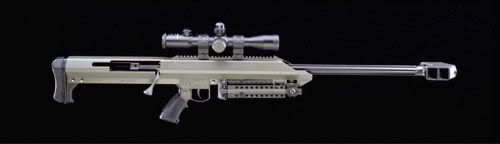
Barett M99
A weapon is a tool which is intended to or is used to injure, kill, or incapacitate a person, damage or destroy property, or to otherwise render resources non-functional or unavailable. Weapons may be used to attack and defend, and consequently also to threaten or protect. Metaphorically, anything used to damage (even psychologically) can be referred to as a weapon. A weapon can be as simple as a club or as complex as an intercontinental ballistic missile.

After World War II most nations adopted 9 mm Luger pistols for military use. The most popular being the FN Browning Hi-Power, which was the first high capacity pistol, the other popular model was the Walther P38 because of its many modern safety features. In 1971 Smith & Wesson was the first company to offer a safe double action high capacity pistol with its Model 59. CZ launched its CZ-75 in 1975. Beretta its Beretta 92 in 1976. GLOCK came up with the ultra modern GLOCK 17 in 1982 and SIG-Sauer introduced its model P226 in 1983. In the early 90s, Heckler & Koch combined what they thought were the most desirable attributes of semi-autos in their pistol, the HK USP.